The Challenge
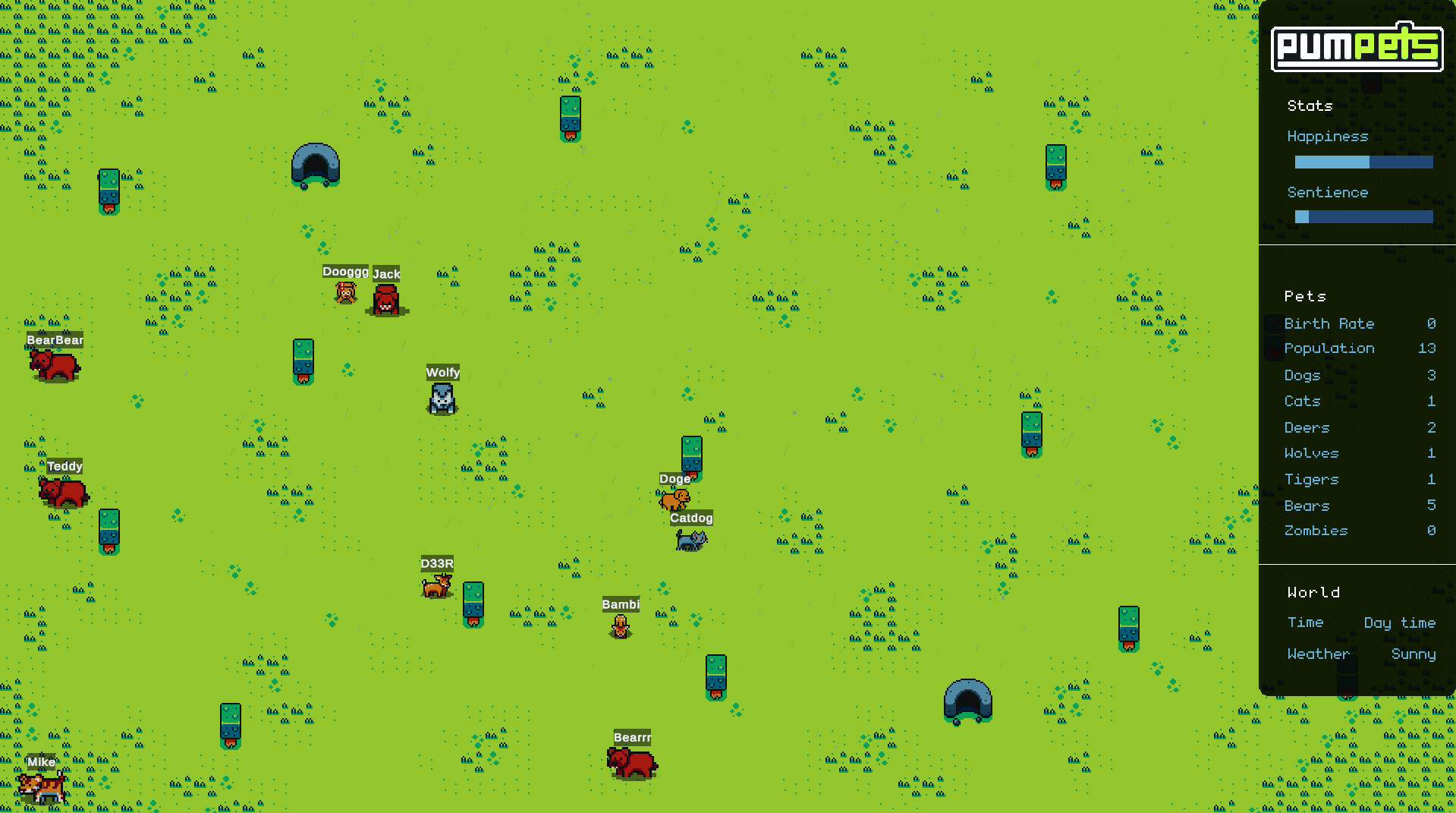
Build a fully autonomous pet ecosystem where multiple online users can spawn pets through a WebGL interface while all animals interact through complex AI states such as breeding, hunting, feeding, and social behavior. The system needed to synchronize real-time data across players without the official Firebase SDK (not WebGL-compatible) and support 20+ AI-driven entities at 144 FPS.
What I Built
Engineered the full backend–gameplay pipeline: a WebGL safe Firebase REST integration, a real-time viewer queue, a modular animal architecture, a centralized spawner manager, and autonomous AI systems powering a persistent multi-user pet ecosystem.
Technical Contributions
1. WebGL-Compatible Firebase Integration via Custom REST API
Problem:
Firebase’s official Unity SDK does not work on WebGL, making database reads/writes impossible for browser users.
Solution:
Created a custom REST wrapper supporting GET, SET, PUSH, and DELETE with async coroutines, enabling full CRUD operations for real-time simulation.
Result:
Delivered a fully functional data pipeline for WebGL that handled spawning, queues, world sync, and multi-user interactions without external plugins.
2. Hierarchical AI State Machine Architecture
Problem:
Pets needed reactive behavior: hunting, breeding and idle transitions. Hard-coded logic made the AI unmaintainable and difficult to extend.
Solution:
Designed an extensible State Machine framework with a base State class and specialized implementations. Each state cleanly handled enter/tick/exit lifecycle and transitions.
Result:
Created flexible AI that supports multiple emergent behaviors without rewriting core logic. Reduced bugs, simplified debugging, and allowed rapid expansion of enemy/pet features.
3. Real-Time Viewer Queue
Problem:
When the ecosystem is full, new viewers needed a fair way to join without interrupting current players or exceeding the pet limit.
Solution:
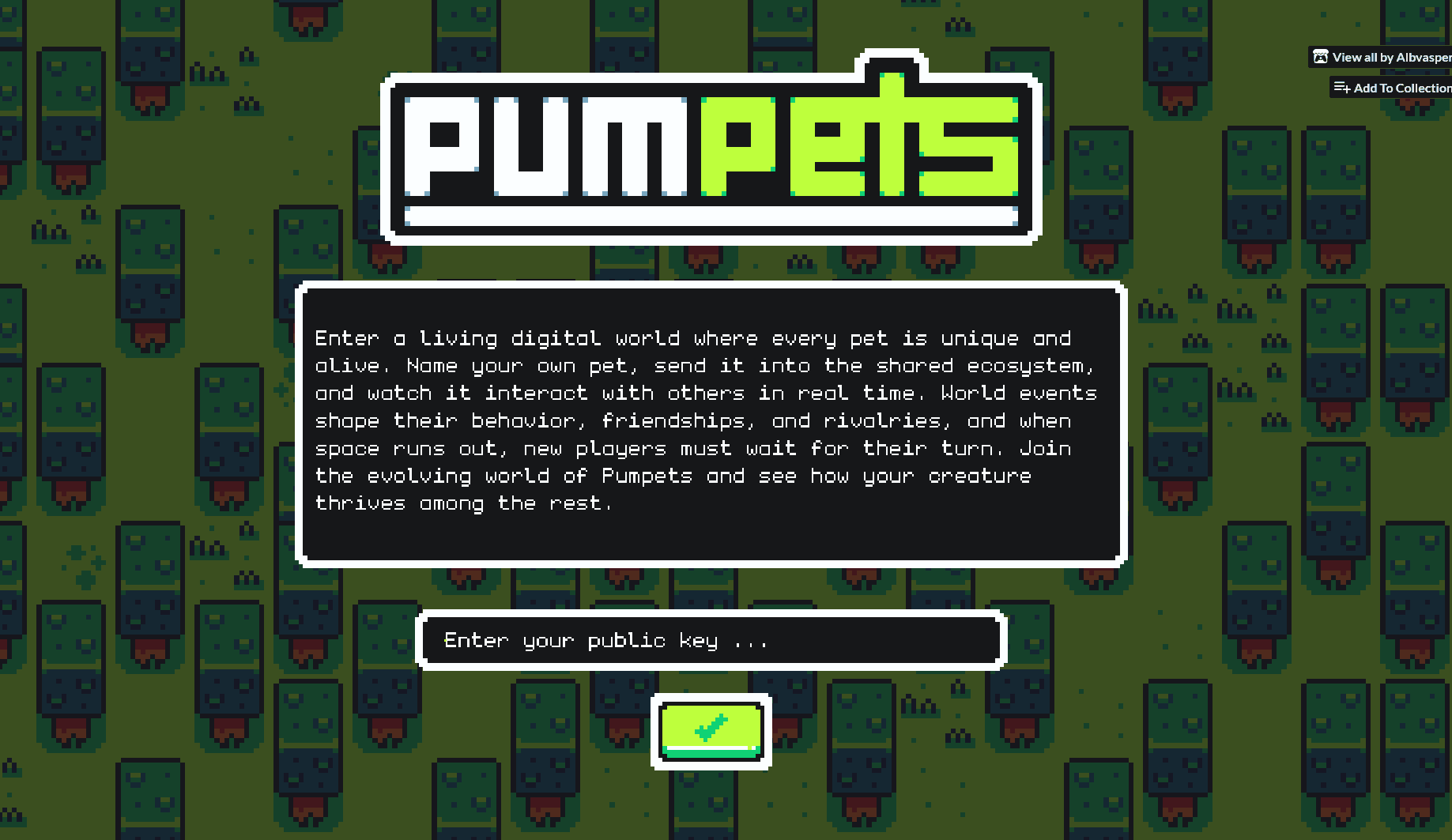
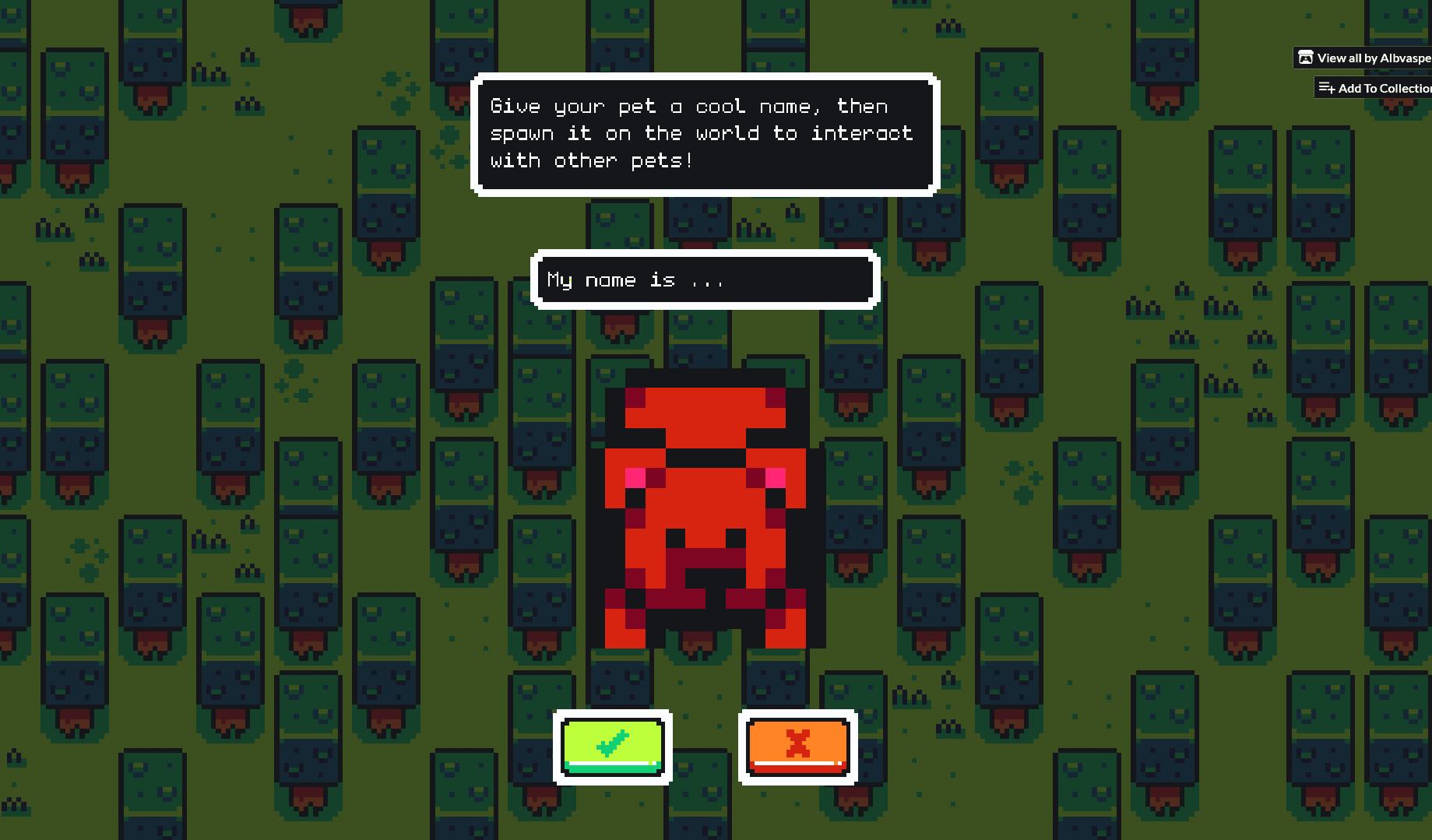
Implemented a polling-based queue system tied to Firebase. When a space opens, the system popped the next viewer, assigned a random pet, and transitioned them to the naming & spawn screen.
Result:
Viewers could join the world smoothly with zero conflicts. Ensured fairness, prevented overpopulation bugs, and created a clean onboarding flow for new players.
4. Animal Architecture
Problem:
The project required multiple animal types (peaceful pets and hostile predators) with shared logic but different behaviors. Duplicated code made updates slow.
Solution:
Designed an inheritance model:
BaseAnimal (Abstract): Movement, physics, health, happiness, timers
Pet: Breeding, needs, passive interactions
HostilePet: Hunting logic, aggression, combat
This allowed states, behavior trees, and physics to operate consistently across all animals.
Result:
Enabled rapid creation of new animal types, reduced maintenance overhead, and kept all AI and physics unified.
5. Firebase Driven Spawner Manager
Problem:
When a viewer finished naming a pet, the host world needed to spawn that pet in the live ecosystem instantly and without duplication or race conditions.
Solution:
Created a centralized spawner that polls Firebase for spawn requests, parses data safely, spawns the corresponding prefab, and clears the request atomically.
Result:
Delivered reliable multi-user spawning with consistent world state, even under rapid bursts of activity. Prevented duplicate spawns and kept the simulation synchronized.
Results & Impact
Achieved full WebGL compatibility through a custom Firebase REST pipeline
Sustained 144 FPS with 20+ live AI-driven entities in the ecosystem
Delivered multi-layer AI with emergent behaviors (breeding, hunting, socializing)
Ensured fair multi-user access via a real-time viewer queue system
Maintained low overhead with an optimized 2-second polling cycle
Guaranteed consistent world state through automatic cleanup and data persistence